
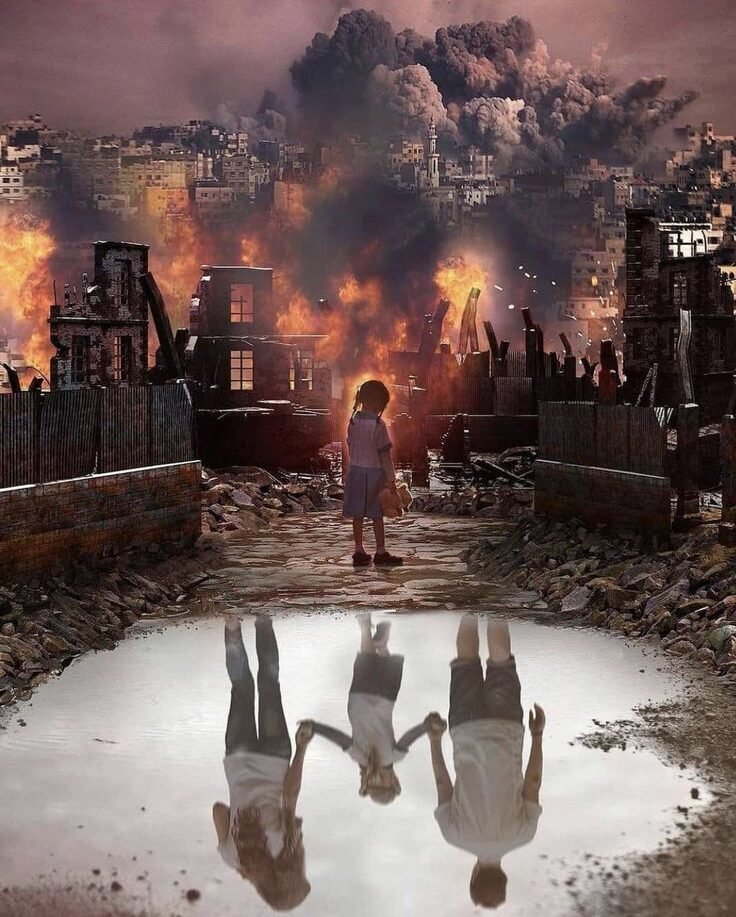

Europe has never been wealthier.
Never more technologically advanced.
Never more interconnected.
Its cities are safe.
Its institutions are stable.
Its welfare systems are expansive.
And yet, beneath this surface of prosperity, a quieter transformation is unfolding.
Not a military collapse.
Not a financial crash.
But something more subtle — and potentially more decisive.
A weakening of long-term strategic thinking.
Civilizations rarely fall in flames.
They fade when they stop thinking beyond the immediate horizon.
The question is no longer whether the West is powerful.
The real question is whether it still thinks strategically enough to remain so.
The Prosperity Paradox
At first glance, the idea of Western decline appears exaggerated.
The European Union remains one of the largest economic blocs in the world.
Ireland’s GDP per capita ranks among the highest globally.
European infrastructure, healthcare, and education systems remain robust.
So where is the crisis?
The answer lies in what prosperity does to strategic culture.
Throughout history, civilizations forged under pressure developed long-term thinking as a survival mechanism. Scarcity forced discipline. Threats forced cohesion.
But sustained prosperity creates a paradox.
When survival is no longer immediate, strategy feels optional.
The modern West has grown accustomed to stability as a default condition. Economic systems are assumed to function. Political structures are assumed to endure. Alliances are assumed to hold.
Assumptions quietly replace strategic vigilance.
And when assumptions dominate culture, resilience erodes invisibly.
When Institutions Replace Responsibility
One of the defining features of modern Europe is institutional depth.
The European Central Bank manages monetary policy.
The European Commission oversees regulation.
National governments provide extensive social systems.
Institutions are strong.
But strength can create dependency.
As institutions expand, individual and collective responsibility often contracts.
Risk is outsourced.
Security is delegated.
Planning becomes procedural rather than visionary.
In democratic systems, political incentives further compress strategic horizons. Election cycles reward short-term gains over generational foresight.
Infrastructure projects are debated in quarterly budget terms.
Demographic challenges are postponed.
Energy dependence is rationalized — until crisis exposes fragility.
The issue is not incompetence.
It is temporal compression.
When the political and cultural time horizon shrinks, long-term thinking becomes culturally rare.
And without long-term thinking, even wealthy systems drift.
The Psychological Shift After Prosperity
The most dangerous transformation is not institutional.
It is psychological.
In post-war Europe, rebuilding demanded sacrifice and planning. Strategic thinking was embedded in survival. Citizens understood fragility.
Today’s generations inherit stability rather than constructing it.
And inheritance changes perception.
Security becomes expected.
Growth becomes normal.
Global integration becomes permanent.
But permanence is an illusion in geopolitics.
The real crisis of Western civilization may not be economic stagnation or military vulnerability.
It may be the erosion of civilizational urgency.
When societies no longer feel responsible for defending their long-term future, they begin consuming it instead.
Empires rarely collapse because they are attacked at their peak.
They decline when internal complacency replaces strategic clarity.
Ireland as a Microcosm of the Western Model
Ireland offers a revealing case study.
Often presented as Europe’s economic success story, Ireland hosts major global technology companies, attracts foreign direct investment, and reports high GDP figures.
Yet beneath these indicators lies structural complexity.
A significant portion of Ireland’s GDP is influenced by multinational corporate accounting practices. Housing shortages persist. Infrastructure strains under rapid growth. Demographic shifts reshape social identity.
Ireland is not failing.
But it embodies a broader Western pattern:
High prosperity combined with structural vulnerability.
Economic strength coexists with housing crises.
Global corporate presence coexists with strategic dependence.
Institutional stability coexists with demographic uncertainty.
This is not collapse.
It is tension.
And tension demands strategic clarity.
The Demographic Question
No long-term strategic analysis of Europe can ignore demographics.
Birth rates across much of the continent remain below replacement levels. Aging populations increase fiscal pressure. Pension systems strain under demographic imbalance.
Demography is slow-moving — but decisive.
A society that does not reproduce itself must either transform culturally or depend structurally on migration to maintain economic vitality.
Both paths require strategic foresight.
Yet demographic policy debates often remain reactive rather than visionary.
The challenge is not merely population numbers.
It is intergenerational continuity.
Civilizations endure when they successfully transmit identity, confidence, and long-term orientation.
When continuity weakens, strategic coherence weakens with it.
Technology Without Sovereignty
Europe has embraced technological regulation as a defining feature of its governance model.
From data protection laws to AI frameworks, the European Union positions itself as a global regulatory leader.
But regulation is not the same as technological leadership.
Many of the world’s dominant technology platforms originate outside Europe.
Ireland hosts European headquarters for major firms — yet decision-making power often resides elsewhere.
The West risks confusing participation with control.
Strategic sovereignty requires not only consumption and regulation, but creation and direction.
Without technological initiative, regulatory influence may prove insufficient in shaping long-term global dynamics.
The Cultural Dimension
Economic data alone cannot measure civilizational vitality.
Culture shapes strategic capacity.
When public discourse prioritizes immediate controversy over generational planning, collective focus narrows.
When education emphasizes credentials over intellectual resilience, adaptability declines.
When identity becomes fragmented, long-term cohesion weakens.
The question facing Western civilization is not whether it has problems.
Every civilization does.
The question is whether it retains the psychological confidence to address them strategically.
Confidence is not arrogance.
It is clarity of purpose over time.
Can the West Recover Strategic Thinking?
Recovery does not require alarmism.
It requires recalibration.
Long-term thinking can be restored through:
• Education that emphasizes history and systems thinking
• Leadership incentives aligned with multi-decade planning
• Civic culture that values responsibility over dependency
• Economic policies that balance growth with resilience
Strategic culture is not inherited permanently.
It is cultivated.
The West’s advantage remains substantial:
Institutional experience.
Technological capability.
Intellectual heritage.
But advantages decay without intentional renewal.
Crisis or Transformation?
It is tempting to frame Western decline in dramatic terms.
Collapse narratives attract attention.
But history rarely unfolds in absolutes.
What appears as decline may also be transition.
Civilizations evolve. Power shifts. Economic models adapt.
The decisive variable is not whether change occurs.
It is whether change is directed strategically or experienced passively.
If Western societies consciously rebuild long-term thinking, what appears as decline may become transformation.
If they drift, prosperity may slowly convert into fragility.
The future of Western civilization will not be determined solely by GDP charts or election cycles.
It will be determined by time horizon.
Strategy is not a luxury of powerful nations.
It is the condition of their endurance.
FAQ SECTION (SEO + Featured Snippet)
Is Western civilization really declining?
Not necessarily collapsing, but facing structural and psychological challenges related to long-term strategic thinking, demographics, and institutional dependency.
Why is strategic thinking important for Europe?
Because long-term planning determines resilience in demographics, technology, economic stability, and geopolitical positioning.
How does Ireland reflect broader Western trends?
Ireland combines strong economic indicators with housing pressures and multinational dependence, illustrating prosperity alongside structural vulnerability.